
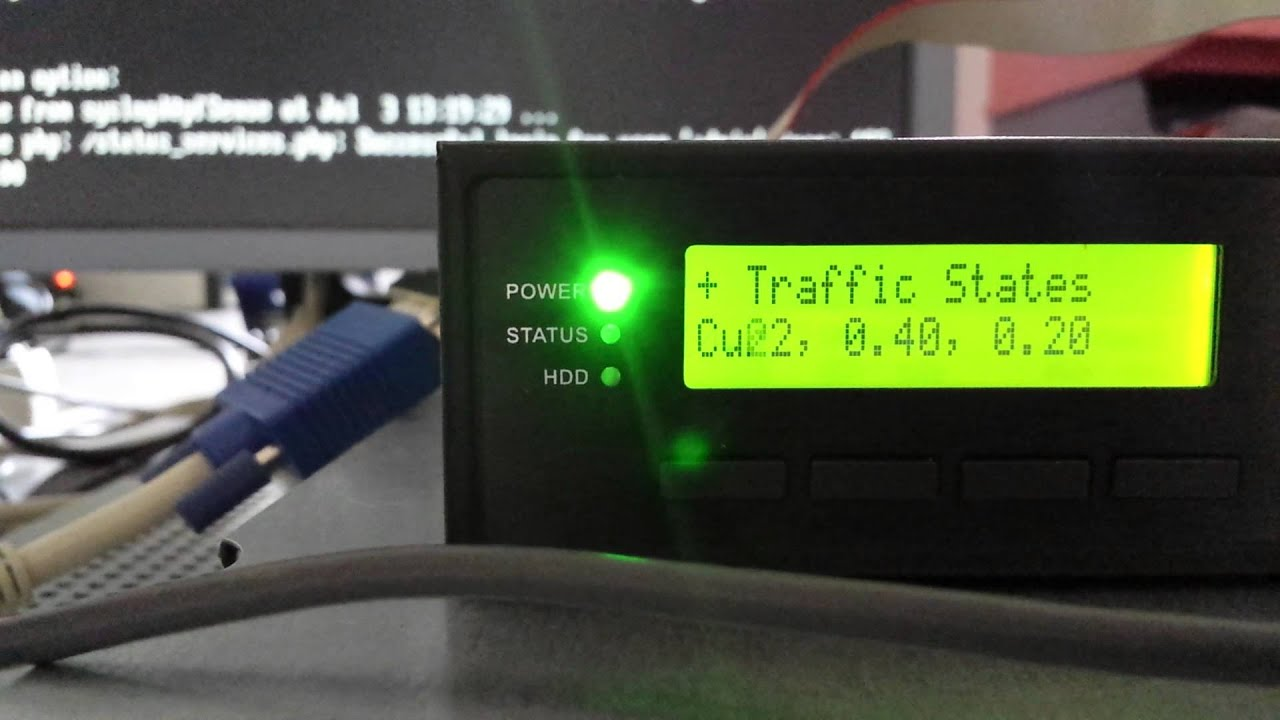
MonteOps mBox
Have you ever considered how a loss of Internet connectivity would affect your day-to-day operations?
Internet connectivity is essential not only for most businesses; in the era of remote work, it has become equally critical for home users. Any outage can be costly.
Interruptions during VoIP calls and Zoom conferences, slow web page loading, the inability to transfer important documents or upload stories and videos to Facebook and Instagram: fluctuations in your Internet access speed affect your daily activities and can slow down your work.
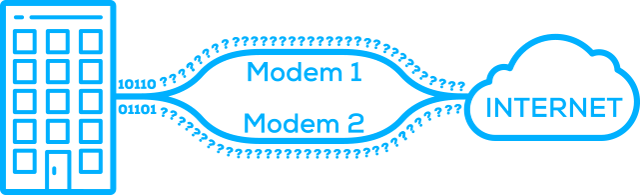
Is it possible to combine several Internet connections into one?
In most cases, the term "channel bonding" is mistakenly applied to NAT-level load balancing (NAT, Network Address Translation, is a mechanism in TCP/IP networks that translates IP addresses) or to failover (the transfer of load to a standby component of a computer system or network, such as a server, network device or functional module, in the event of a failure or malfunction of the primary component of the same system or network).
Many consumer routers support Multi-WAN functionality. Some manufacturers refer to this as channel aggregation, which is not entirely accurate.
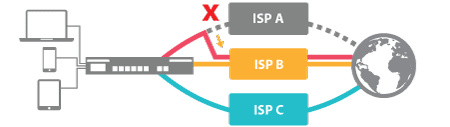
The most accessible and widely used method of using several Internet connections simultaneously is connection-level load balancing (NAT).
For simplicity, assume that you have three Internet service providers, each assigning you a separate IP address from its network. All of these providers are connected to a single router with Multi-WAN support. This may be OpenWRT with the mwan3 package, MikroTik, Ubiquiti (UBNT) or any other consumer router.
That is, when connecting to the remote server example.com through each of the providers, the remote server will see three different client IP addresses. In this case, "load balancing" makes it possible to distribute the load across the three channels and use all three simultaneously. Assume that the load is distributed equally across all channels. As a result, when a client opens a website containing, for example, three images, each image is downloaded through a separate provider. On the website side, this appears as connections from three different IP addresses.
The same applies to video streaming. If you stream video to a platform such as Twitch, IP connection-level load balancing provides no particular benefit, since the video stream is transmitted within a single connection. In this case, if one provider experiences connectivity issues, such as packet loss or reduced speed, you cannot switch to another provider instantly. The stream has to be stopped and reconnected.

This load-balancing mode often causes problems for users. For example, many websites strictly bind cookies and user sessions to the client's IP address; if the address changes unexpectedly, the request is rejected or the user is logged out. This frequently occurs in online banking systems, social networks and other websites with strict user session rules, because the request was routed through a provider other than the one to which the session is bound.
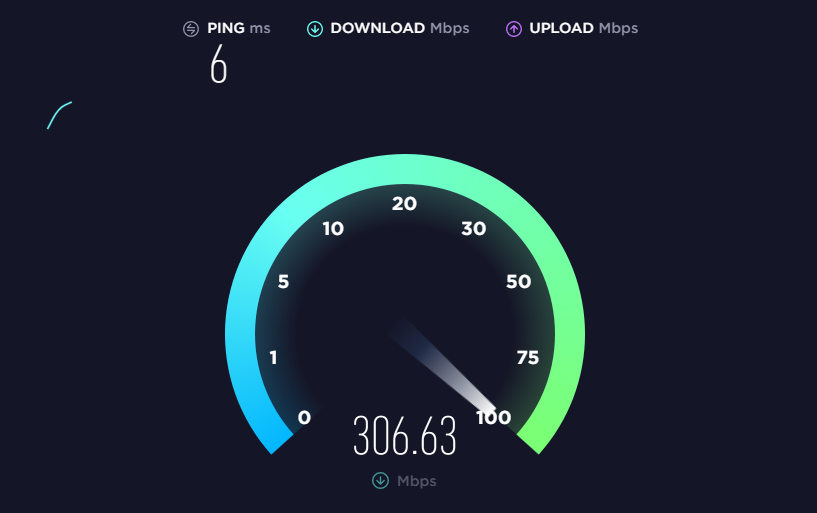
When downloading torrents, connection-level load balancing aggregates the bandwidth of all channels, making it possible to obtain the combined Internet speed when multiple connections are used. For example, if each of three providers offers 100 Mbps, torrent downloads will reach 300 Mbps. This is because a torrent client opens multiple connections, which are distributed across all providers and ultimately utilize all channels.
It is important to understand that a single TCP connection always passes through only one provider. A single connection will always use only one Internet channel. That is, if a single large file is downloaded over HTTP, the connection will be established through one of the providers, and if the connection with that provider is lost, the download will also be interrupted.
True channel bonding makes it possible to route a single connection to a service such as Twitch through all providers simultaneously, so that the connection is not interrupted if any of the providers fails.
A Twitch server, for example, can accept a video stream from only one IP address, which therefore must remain constant regardless of which providers have gone down and which are operational. To achieve this, a bonding server is required that accepts all of our connections and combines them into one.
The bonding server aggregates all channels into a single virtual tunnel. In turn, all connections to external websites originate from the bonding server's address.
In this scheme, all providers are used, and the failure of any one of them will not interrupt the connection to the Twitch server. In essence, this is a special VPN tunnel that runs over several Internet channels simultaneously. The primary objective is to obtain the highest-quality communication channel possible. If one of the providers experiences problems such as packet loss or increased latency, this should not affect connection quality, as the load is automatically redistributed to the other, higher-quality channels available.
This issue has long been a concern, for example, for those who broadcast live events and lack access to a high-quality Internet connection.
Expensive commercial video streaming solutions are available, but such devices cost from EUR 2,000, plus a subscription fee for the bonding service, plus the cost of modems.
For example, Teradek manufactures routers that accept several USB modems.
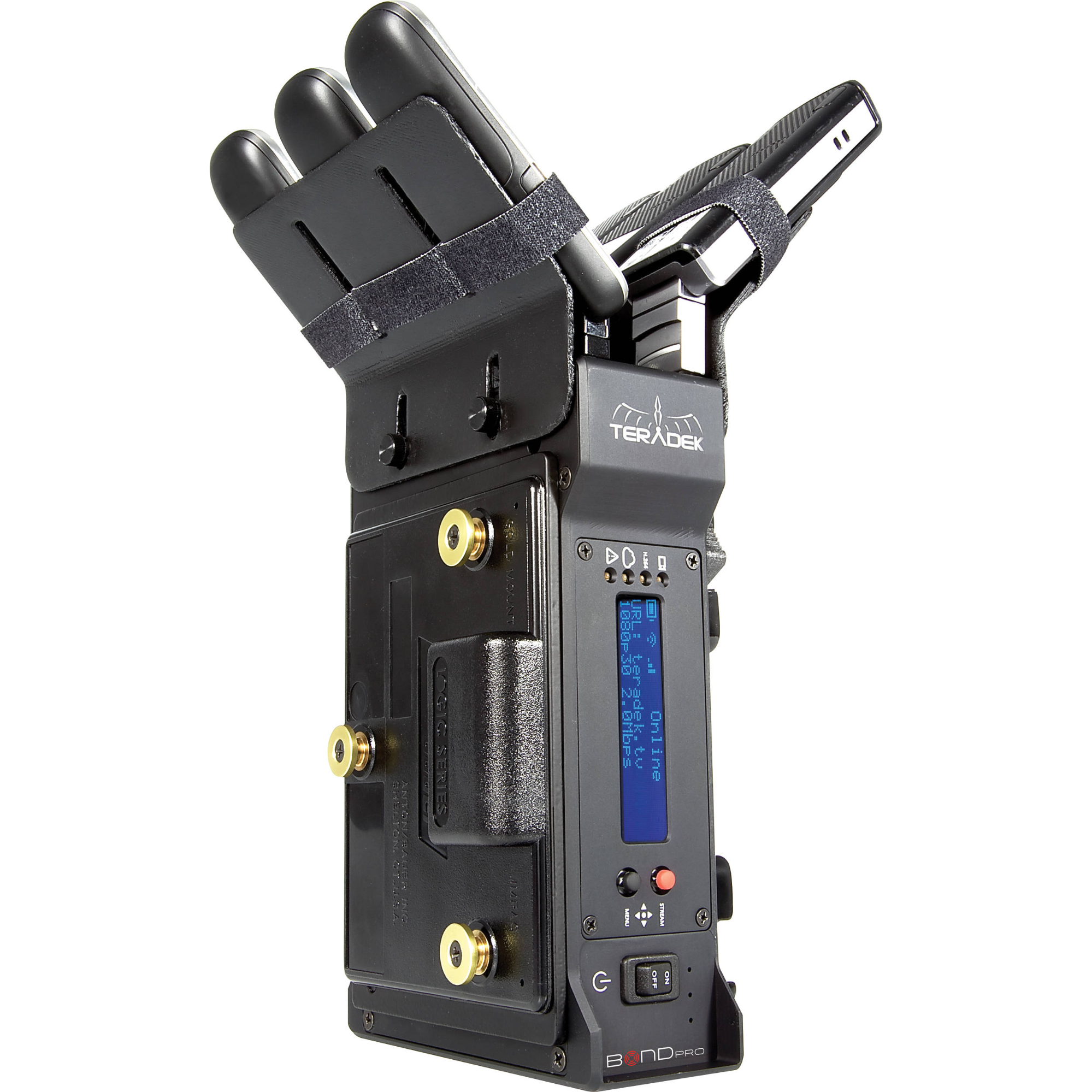
Notably, Teradek no longer produces versions that support third-party USB modems; the entry-level model is now supplied with its own modems.
MonteOps offers a solution based on the open MP-TCP protocol at affordable prices, comparable to the subscription fee for a single ADSL connection.
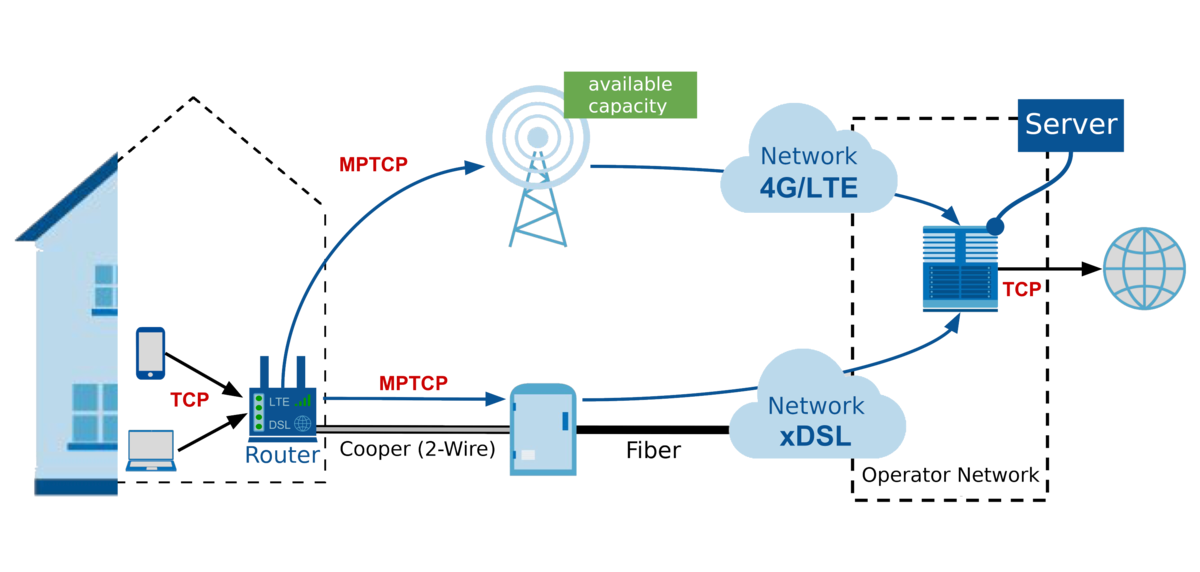
The MP-TCP (MultiPath TCP) protocol was developed at the Université catholique de Louvain (Belgium) specifically to enable a simultaneous connection over multiple channels. It has been supported by Apple iOS for several years, enabling simultaneous connections to Apple servers via Wi-Fi and the cellular network. It is important to understand that this is not two separate TCP connections, but a single connection established over several channels simultaneously. For this to work, the remote server must also support the MP-TCP protocol.

The MonteOps mBox solution is an MP-TCP router implementation specifically designed for and compatible with most providers in the Balkan region, enabling true channel bonding. It consists of two components: a bonding server hosted in a secure data center, and a dedicated router to which several Internet service providers and the client devices themselves (computers, phones, access points) are connected.
MonteOps mBox ensures stable Internet access through the simultaneous use of several providers (LTE, ADSL, fiber and even Wi-Fi). mBox protects you against potential Internet connectivity interruptions and the unstable performance of one or more providers. mBox maintains your Internet connection to ensure the continuity of your business processes. Optionally, MonteOps mBox may include a traffic optimization module, which reduces costs when using traffic-limited connections such as LTE, as well as a centralized Wi-Fi access point management module (WLAN controller).
You can add from 1 to 8 additional connections to your primary line; mBox can significantly increase your Internet connection speed and provide fault tolerance.
Make your Internet access more reliable and ensure uninterrupted operations with MonteOps mBox. We will take care of the rest.